Robert Frost’s “Stopping by Woods on a Snowy Evening” is still widely studied because it looks simple at first, yet it leaves readers with far more to think about than a quiet winter scene. Students often need two things most, a clear summary they can follow and a solid analysis that explains why the poem matters.
In this poem, the speaker pauses to watch snow fall in the woods, but that calm moment opens up bigger ideas about duty, rest, beauty, and the pull of the unknown. The poem’s stillness is part of its power, because Frost lets a few short lines carry a sense of hesitation and choice that readers can return to again and again.
If you’re revising for class or putting together study notes, this guide will make the poem easier to understand without losing what gives it its depth.
A quick summary of Stopping by Woods on a Snowy Evening
Robert Frost’s Stopping by Woods on a Snowy Evening is a short poem with a simple story at its centre. A traveller pauses beside snowy woods and watches the scene for a moment, but he does not stay for long. The poem moves gently, almost like a carriage ride at dusk, and each stanza adds a little more to the speaker’s pause before he remembers that he still has a journey to finish.
For the full text, the Poetry Foundation’s edition of the poem is a reliable reference.
What happens in each stanza
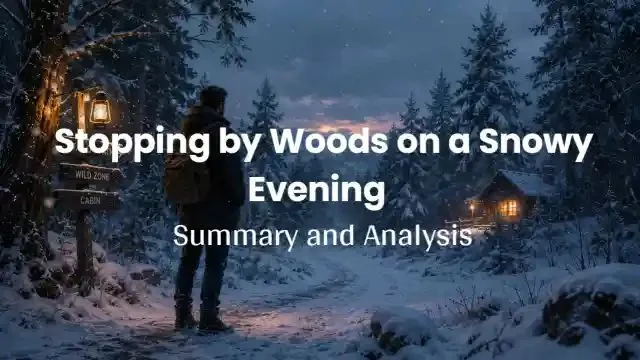
In the first stanza, the speaker stops his horse near some woods on a snowy evening. He watches the woods fill with snow, and the moment feels private and still. Nothing dramatic happens, but the pause matters because it draws him in.
In the second stanza, the horse reacts because the stop feels unusual. There is no farmhouse nearby, so the horse seems puzzled by the delay. That small reaction reminds us that the speaker is lingering in a place where he does not usually stop.
The third stanza stretches the quiet even further. The woods are dark and silent, and the speaker notices how peaceful they are. He listens, looks, and seems tempted to remain there a little longer, as though the calm scene is pulling him in.
In the final stanza, the speaker turns away from that temptation. He remembers that he has promises to keep and a long way still to travel before he can rest. The poem ends with a clear sense of duty, because he chooses to move on even though the woods invite him to stay.
Why the poem feels so still and quiet
The mood comes from the setting itself. Snow softens the landscape, the woods stand dark and silent, and evening closes in around the speaker. That combination creates a calm, dreamlike scene that feels far removed from everyday noise.
The poem gives readers a first impression of peace, but also a faint sense of hesitation. The silence is so complete that it almost invites the speaker to forget the outside world for a while.
What the poem is really saying beneath the surface
“Stopping by Woods on a Snowy Evening” works because it says more than it first appears to say. On the surface, it is a brief pause in the snow. Beneath that, however, the poem opens up ideas about rest, temptation, responsibility, and even the end of life.
The woods as a place of rest and escape
The woods can feel like a promise of peace. They are quiet, snowy, and separate from ordinary life, so the speaker seems drawn to them as a place where pressure drops away. That stillness matters because it gives the poem its calm, almost hypnotic mood.
The attraction is easy to understand. After all, who would not want to stop for a moment when the world looks so soft and silent? The speaker notices that beauty and begins to linger, as though the woods offer a break from duty and noise.
This is one reason the poem stays with readers. It captures that familiar human wish to pause, breathe, and step outside routine for a while. For a useful overview of common interpretations, Poem Analysis on Frost’s poem gives a clear summary of the poem’s main themes.
Duty pulls the speaker back to the real world
The final stanza changes the mood. The speaker remembers that he has “promises to keep”, and that line brings him back to responsibility. The woods may be beautiful, but life does not stop there.
That contrast is central to the poem. One side offers stillness and rest, while the other side asks for movement, effort, and commitment. The speaker chooses to go on, which tells us the poem is about self-control as much as it is about longing.
The poem’s power comes from that quiet turn, where temptation meets duty and duty wins.
Why many readers connect the woods with death
Some readers also see the woods as a symbol of death, and that reading fits the poem’s dark, quiet atmosphere. The evening setting, the deep woods, and the final decision to move on can suggest a deeper boundary the speaker does not cross.
This does not mean the poem has only one meaning. It simply shows how Frost uses symbolism to let a simple scene hold several ideas at once. In that sense, the poem can be read as a meditation on rest at the edge of life, where silence feels both comforting and unsettling.
If you want to compare interpretations, Norman Rosenthal’s analysis offers another detailed reading of the poem’s darker symbolism.
A line-by-line look at the poem’s language and sound
Frost’s skill in Stopping by Woods on a Snowy Evening lies in how much he does with so little. The poem sounds plain at first, yet the wording, rhythm, and repeated sounds work together to create a calm surface with real tension underneath. That is why it is so useful for classroom discussion and exam answers, because the language is easy to quote but rich enough to analyse in detail.
How Frost uses simple words to create a deep effect
Frost chooses everyday language instead of ornate or difficult phrasing. Words such as “woods”, “snowy”, “evening”, “horse”, and “frozen” are concrete and familiar, so the scene feels immediate and natural. You do not need to decode the poem to enter it, which is part of its lasting appeal.
That plain diction also keeps the poem open. A simple line can suggest a real winter journey, a moment of temptation, or a wider meditation on life and death. Frost does not explain everything for the reader, so the words stay memorable because they carry more than one possible meaning.
The effect is even stronger because the speaker sounds calm and thoughtful. He does not speak in dramatic bursts. Instead, he uses quiet, measured language that matches the stillness of the snowy setting.
A useful way to read the poem is to notice how ordinary words become loaded with feeling:
- “woods” suggests shelter, mystery, and distance from daily life
- “promises” points to duty and responsibility
- “sleep” can mean ordinary rest, but it can also hint at final rest
- “lovely” keeps the scene attractive, even when the mood grows serious
For a brief guide to Frost’s style and metre, this analysis of the poem’s structure is a helpful companion.
The rhyme scheme and repeated final line
The poem follows an AABA pattern in each stanza. In simple terms, the first, second, and fourth lines rhyme with each other, while the third line sounds different. That small break gives the poem a gentle forward movement, then a pause, then a return to closure.
The last line is repeated, which gives the ending extra weight. “And miles to go before I sleep” appears twice, so it feels fixed in the mind like a promise that cannot be ignored. The repetition makes the speaker’s decision sound firm, not uncertain.
This is where the poem’s music matters most. The rhyme keeps the stanza smooth, almost like the steady pace of a horse on snow. At the same time, the repeated line slows the ending down and draws attention to the speaker’s sense of duty.
The repeated final line matters because it sounds calm, yet it carries pressure. The speaker is moving on, but the last words stay with the reader.
That balance between movement and closure is one reason the poem works so well. The speaker pauses, looks, and then leaves. The rhyme scheme mirrors that motion, while the final repetition seals the poem with a sense of resolve.
Images that make the poem easy to picture
Frost builds the poem through clear visual details. You can see the woods filling with snow, the darkness thickening, and the frozen lake lying still beside the trees. These are simple images, but they give the poem a sharp, memorable setting.
The contrast between light and dark is especially effective. The woods are “lovely, dark and deep”, which makes them beautiful and slightly unsettling at the same time. Snow softens the scene, while the dark trees create a sense of depth that pulls the reader inward.
Each image also hints at a larger idea. The woods suggest retreat, the snow suggests silence, and the frozen lake suggests stillness held in place. Together, they create a landscape that feels peaceful on the surface and uncertain underneath.
The poem’s imagery works because it is exact rather than decorative. Frost does not overload the scene with symbols. Instead, he gives you a handful of details that readers can picture at once:
- Woods: private, enclosed, tempting
- Snow: hush, softness, cold stillness
- Darkness: uncertainty, rest, the unknown
- Frozen lake: calm surface, hidden depth
That visual clarity helps the poem stay in the reader’s mind. You remember the scene first, then the meaning begins to settle in around it.
Main themes students should remember for exams
For exam answers, keep your focus on the poem’s three central ideas: the pull of duty, the appeal of nature, and the speaker’s solitude. These themes work together, so it helps to explain how each one supports the others rather than treating them as separate points. If you can show that balance, your answer will sound clear and confident.
Duty versus desire
The strongest theme in Stopping by Woods on a Snowy Evening is the tension between what the speaker wants and what he must do. The woods offer rest, stillness, and escape, but the journey must continue. That choice gives the poem its emotional force, because the speaker feels the attraction of staying while knowing he cannot.
This is easy to connect to daily life. People often face the same split between comfort and responsibility, whether that means revising for an exam, finishing work, or keeping a promise when they would rather stop. Frost makes that decision feel personal, yet the situation is broad enough for almost anyone to recognise.
The final lines matter because they turn a quiet pause into a test of self-control.
For revision, remember that this theme is often described as the conflict between temptation and duty. In exam essays, that phrase can help you write a focused point quickly, especially when linked to the repeated line, “miles to go before I sleep”. A useful overview of this tension appears in SparkNotes’ theme guide.
Nature as comfort and temptation
The poem presents nature as calm, beautiful, and inviting. The snowy woods feel soft, hushed, and far removed from human noise. Because of that, they seem like a place where the speaker could rest and let the world wait.
At the same time, the woods are not just comforting. They are also tempting, almost as if they are calling the speaker away from his path. That is why the setting feels both peaceful and unsettling. The same beauty that draws him in also makes the scene feel slightly dangerous, because it encourages him to forget his obligations.
This double effect is important for exam answers. Nature in the poem is not a simple background; it shapes the speaker’s choice. In other words, the woods are lovely precisely because they are so hard to leave. For another clear reading of the poem’s symbolism, Norman Rosenthal’s analysis gives a helpful account of the darker side of the imagery.
A short way to remember this theme is:
- Calm: the snow and silence create peace
- Beauty: the woods are attractive and memorable
- Temptation: the speaker wants to linger
- Unease: the same stillness feels almost too complete
That mix of attraction and discomfort is one reason the poem stays in the mind.
Silence, loneliness, and reflection
The poem gives us a private moment, almost like overhearing a thought that was never meant to be shared. The speaker is alone with the woods, the horse, and his own mind. That silence makes the poem feel reflective, and it also leaves room for mystery.
Loneliness matters here because it shapes the mood. Nothing interrupts the speaker’s thinking, so the poem becomes a pause in which he measures his own life. The quiet setting gives his thoughts extra weight, and the reader is left to wonder how far those thoughts go.
This is also why the poem feels so thoughtful in class discussion. It is not only about a man stopping in the snow. It is about a mind standing still for a moment before choosing to move on. That is a simple idea, but it opens the poem out in a powerful way.
For short answers, you can link this theme to introspection and isolation. Those are strong revision words, but the idea stays plain enough: the speaker is alone, and his silence makes the poem feel personal. At the same time, that private moment gives the poem its wider appeal, because readers can place their own doubts and duties inside it.
Key literary devices that shape the meaning
Robert Frost keeps the poem plain on the surface, but the meaning grows through the devices he chooses. The woods, the horse, the rhythm, and the repeated final line all work together, so the poem feels calm while carrying a stronger emotional weight underneath. If you want a strong exam answer, focus on how Frost uses technique to turn a short winter scene into a poem about choice, duty, and the pull of rest.
Symbolism in the woods, snow, and darkness
The woods are more than a place on a map. They can suggest peace, privacy, and escape from ordinary life, which is why the speaker is drawn towards them. At the same time, they also feel distant and unknown, so they can hint at uncertainty or even death.
The snow adds another layer. It softens the landscape and makes everything seem still, clean, and hushed. That calm can feel comforting, but it can also suggest a kind of suspension, as if time has slowed down and the speaker has stepped outside normal life for a moment.
Darkness matters too. It is not only the setting at the end of the day. It can suggest the unknown, the end of a journey, or the final stillness that death brings. Frost never forces one single meaning on the reader, which is why the symbols stay open and memorable.
A simple way to remember the symbolism is:
- Woods suggest solitude, escape, and mystery
- Snow suggests silence, stillness, and a pause in time
- Darkness suggests uncertainty, ending, and the unknown
For a clear breakdown of Frost’s poetic choices, SparkNotes’ guide to poetic devices is a useful companion.
Personification of the horse
The horse feels almost human because it reacts as if it understands that the stop is unusual. Frost gives it a kind of voice through its movement and behaviour, so it seems to question the speaker’s decision to pause in the snow. That makes the horse more than part of the setting.
This device adds a small but important touch of realism. The horse becomes a practical presence, tied to the everyday world, while the speaker seems drawn towards quiet reflection. In that contrast, the horse acts like common sense. It reminds us that the journey is not over and that stopping here is out of the ordinary.
The horse also helps shape the mood. Its reaction makes the scene feel less dreamy and more grounded, because something in the poem is still alert to responsibility. You can read that as a subtle warning. The speaker may be tempted by the woods, but the horse pulls the poem back towards movement and purpose.
In class or in an essay, it helps to say that the horse gives the poem a second viewpoint. The speaker wants to linger, while the horse seems to ask why they are stopping at all. That quiet tension adds depth without breaking the poem’s stillness.
Repetition and rhythm in the closing lines
The ending stays in the mind because Frost repeats the line, “And miles to go before I sleep”. That repetition gives the thought extra weight, almost like the speaker has to remind himself of his duty before he can move on. It also makes the ending feel settled, not rushed.
Rhythm matters just as much. The steady beat of the poem sounds smooth and controlled, which suits the speaker’s calm voice. Even when the meaning becomes serious, the sound stays gentle. As a result, the poem never feels dramatic in an obvious way. Instead, it closes with quiet firmness.
The repeated line does more than sound memorable. It strengthens the idea that the speaker has a long journey ahead, both literally and possibly in a wider sense. The phrase “miles to go” suggests effort, time, and obligation, while “sleep” can mean rest after work or a final resting place. Because Frost repeats the line, both meanings stay active at once.
That balance between sound and sense is one reason the poem lasts. The rhythm carries the reader forward, but the ending slows everything down and leaves a final echo of resolve. For a fuller note on the poem’s structure and sound, this analysis of Frost’s rhyme and rhythm offers a helpful reference.
The ending works because it sounds simple, yet it closes the poem with real force. Frost lets the music do the hard work, and the final repetition makes the speaker’s decision feel calm, serious, and complete.
How to write about Stopping by Woods on a Snowy Evening in an exam
When you answer on Robert Frost’s Stopping by Woods on a Snowy Evening, keep your writing clear and controlled. The poem is short, so your job is to show that you understand both the surface scene and the ideas behind it. A strong answer usually starts with a plain summary, then moves into theme and technique without drifting off into general comment.
A simple thesis statement you can build on
A good opening line should be direct and flexible. You can say that the poem presents a quiet winter moment that turns into a reflection on duty, temptation, and the pull of rest. That gives you a clean starting point without boxing you into one fixed interpretation.
You could shape it in a few different ways:
- The poem describes a peaceful snowy scene, but it also shows the speaker torn between stillness and responsibility.
- Frost uses a simple winter setting to explore temptation, solitude, and the need to continue life’s journey.
- What looks like a brief stop in the woods becomes a larger meditation on duty and human weakness.
Keep the statement short, then let the rest of your answer prove it. If you want a quick model of the poem’s wider critical discussion, this analysis of Frost’s poem is useful background for revision.
The best points to include in a short answer
If you only have a few lines, focus on the essentials. The examiner wants to see that you can sum up the poem accurately and support your point with a couple of well-chosen details.
A strong short answer should cover:
- Summary: The speaker stops by snowy woods and watches them in silence before moving on.
- Theme: The poem explores duty, temptation, and the attraction of rest.
- Tone: It feels calm, reflective, and slightly uneasy.
- Symbolism: The woods can suggest escape, solitude, or even death.
- Ending: The repeated promise to go on, “miles to go before I sleep”, shows responsibility winning over the desire to stay.
That is usually enough for a brief paragraph answer. If you can, add one technique as well, such as repetition or imagery, because it shows you are analysing rather than just retelling. For a simple example of how poetry techniques are discussed in study notes, this figurative language guide gives a clear model.
Keep your answer anchored in the poem’s final choice. The speaker pauses, but he does not stay.
For longer exam responses, link your points together in a steady order. Start with what happens, move to what it means, then mention one or two literary devices. That keeps your writing focused and makes your knowledge look organised rather than scattered.
Bringing the poem’s meaning together
“Stopping by Woods on a Snowy Evening” leaves a strong impression because it looks so calm on the surface, yet it carries a second layer of meaning beneath that stillness. The speaker pauses in a quiet winter setting, but that pause opens out into thoughts about duty, rest, and the pull of something tempting and unknown. Frost keeps the language simple, which makes the poem easy to follow, while the repeated final line gives the ending its lasting weight.
Why the ending stays with readers
The closing lines matter because they resolve the speaker’s moment of hesitation without making it feel loud or dramatic. He sees the beauty of the woods, feels their stillness, and then chooses to keep going. That choice gives the poem its shape, and it also explains why the final line is so memorable: the journey is not finished, and responsibility still waits ahead.
For many readers, that final movement away from the woods is what gives the poem its emotional force. The scene is peaceful, but peace alone is not the whole story. Frost turns that quiet moment into a reflection on what it means to pause, what it means to be tempted, and what it means to carry on.
A final point to remember for revision
If you need one clear takeaway, keep this in mind: the poem’s power comes from the gap between what it shows and what it suggests. The snowy woods, the silent evening, and the steady rhythm all create calm, yet the deeper meaning reaches towards choice, rest, and responsibility. For further reading on interpretation, Poem Analysis on Frost’s poem and Norman Rosenthal’s reading of the poem offer useful perspectives.
In the end, Frost takes a simple winter scene and turns it into a thoughtful poem about the pull of stillness and the duty to move on.
Discover more from GYANKUNDLI
Subscribe to get the latest posts sent to your email.