English Literature

English Literature Master Study Portal

In-depth chapter summaries, line-by-line critical analysis, literary devices, themes, character sketches, and solved questions for RPSC 1st & 2nd Grade, UGC NET, School Boards (RBSE/CBSE), and BA/MA English Literature.

📜 Line-by-Line Analysis
🎭 Drama & Poetry
💡 Literary Devices
🎯 Exam Notes

Prepare for Literature MCQs & Previous Year Questions

Practice poem-wise multiple choice questions, critical quotes, and exam-focused objective questions.

📖 Attempt Literature Quizzes

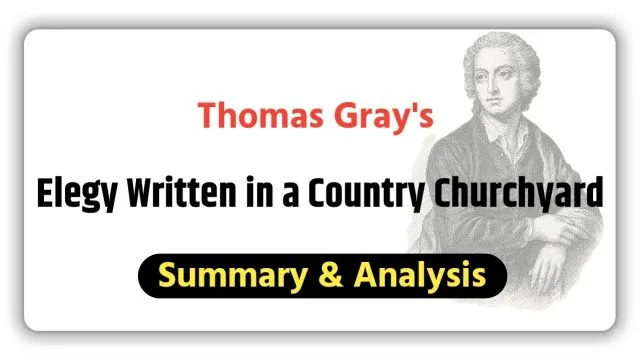
Elegy Written in a Country Churchyard

Elegy Written in a Country Churchyard : Summary and Analysis

Elegy Written in a Country Churchyard is the most celebrated poem of Thomas Gray, first published in 1751. This masterpiece of English literature is admired for its deep reflection on life, death, and the dignity of common people. Written in a quiet rural churchyard at evening, the poem captures the stillness of nature and the

Elegy Written in a Country Churchyard : Summary and Analysis Read More »

Where the Mind is Without Fear

Where the Mind is Without Fear : Summary and Analysis

Rabindranath Tagore’s famous poem Where the Mind is Without Fear was originally composed around 1900. It first appeared in his Bengali poetry collection Naibedya, under the title Prarthana (which means “Prayer”). Later, in 1911, Tagore himself translated it into English, and it was published as Poem 35 in Gitanjali by the Indian Society in London

Where the Mind is Without Fear : Summary and Analysis Read More »

Batter My Heart, Three-Person'd God

Batter My Heart, Three-Person’d God : Summary and Analysis

John Donne’s “Batter My Heart, Three-Person’d God” is one of the most intense and powerful poems of his Holy Sonnets. Written in the Petrarchan sonnet form, it reflects Donne’s deep spiritual struggle and his urgent cry for God’s intervention. Unlike his secular poems, where love and passion dominate, this sonnet is fully devoted to the

Batter My Heart, Three-Person’d God : Summary and Analysis Read More »

Shall I Compare Thee to a Summer’s Day

Shall I Compare Thee to a Summer’s Day : Summary and Analysis

William Shakespeare’s Sonnet “Shall I Compare Thee to a Summer’s Day” is one of his most famous poems from the collection of 154 sonnets. In this sonnet, the poet compares the beauty of his beloved to a summer’s day. He says that the beloved is more lovely and more gentle than summer, which is often

Shall I Compare Thee to a Summer’s Day : Summary and Analysis Read More »

Satire 30 MCQs with Answers

Literary Devices : Satire 30 MCQs with Answers

Satire 30 MCQs with Answers : Satire is one of the most powerful literary devices used by writers to expose human follies, social evils, and political corruption. The word satire comes from the Latin word satura, which means “medley” or “mixture.” In literature, satire is not simply about laughter; it is a tool that blends

Literary Devices : Satire 30 MCQs with Answers Read More »

Scroll to Top