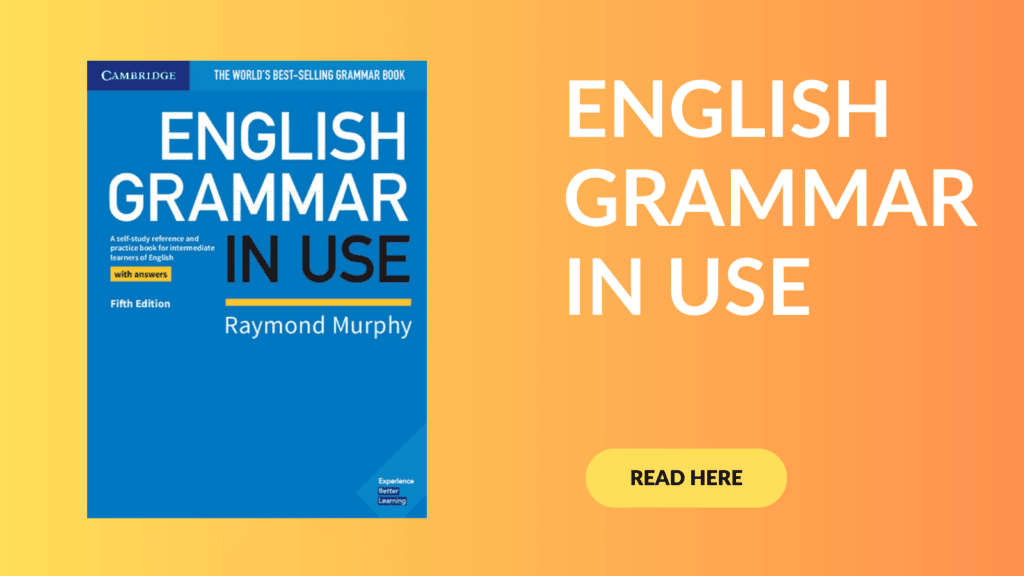

When students begin to study nouns, they usually encounter one of the most fundamental concepts in English grammar. As a primary word class, a noun acts as the label for a person, place, or thing, or even an abstract idea. Understanding this grammatical category is essential, as it helps clarify how sentences are constructed and makes other complex grammar topics much easier to grasp.
Because nouns are one of the most important parts of speech, they are often referred to simply as naming words. If these terms sometimes confuse you, you are certainly not alone. While some nouns are very easy to identify, others can change their role depending on the context of the sentence. Let us make this topic clear, simple, and easy to remember.
Key Takeaways
- Nouns are essentially naming words, as they identify people, places, things, animals, and abstract ideas.
- There are several distinct types of nouns to learn, including common, proper, concrete, abstract, countable, uncountable, collective, singular nouns, and plural nouns.
- A noun serves a crucial role in grammar, acting as the subject, object, or complement within a sentence.
- Language learners often find it tricky to distinguish nouns from adjectives, verbs, and pronouns.
- When you begin your journey into English grammar, studying the parts of speech nouns is widely considered the best place to start.
What a noun is and why it matters
At its most basic level, a noun is a word used for naming a person, place or thing, or even an abstract idea. When you look at the sentence “Riya reads a book”, both Riya and book are nouns. Similarly, in the sentence “Honesty is important”, the word honesty acts as a noun, even though it represents a concept rather than a physical object.
Nouns are vital because they give names to the world around us and the thoughts inside our minds. A noun often acts as the subject of a sentence, serving as the central focus of what you are discussing. Without this essential part of speech, sentences would feel empty, much like labels removed from every drawer in a classroom.
In English grammar, the noun is one of the foundational parts of speech. These words appear in simple and complex sentences alike, forming the backbone of stories, questions, instructions, and exam answers.
A quick way to identify a noun is to ask, “What is being named here?” If a word identifies someone or something, it is likely a noun.
If a word can fit after “a”, “an”, “the”, “this”, or “my”, it is often a noun.
That test does not work every time, but it is an excellent starting point for beginners. For example, you can say “a pen”, “the city”, “this idea”, or “my brother”. Each of these highlighted words is a noun. Because these words help you understand the meaning of a sentence almost instantly by establishing the topic, teachers and grammar books place a huge amount of importance on understanding them correctly.
Types of nouns with simple examples
Nouns are not all the same. They are grouped into categories so that learners can understand how they work in various contexts.

Common nouns and proper nouns
Common nouns provide a general name for a person, place, or thing. They do not refer to anything specific.
Examples of common nouns are: boy, city, school, river, and teacher.
Example sentences:
- The girl is carrying a bag.
- Our school opens at 8 o’clock.
- A river flows near the village.
Proper nouns identify a particular person, place, or thing. Unlike common nouns, these always begin with a capital letter.
Examples of proper nouns are: Rohan, London, India, Monday, and the Thames.
Example sentences:
- Rohan won the race.
- My aunt lives in London.
- We visited India last year.
The difference is simple. City is a common noun, whereas Jaipur is a proper noun. One is general, and the other is specific.
Concrete nouns and abstract nouns
A concrete noun names something you can experience through your senses, such as sight, sound, touch, smell, or taste. It possesses a physical form.
Examples of concrete nouns are: chair, apple, bell, flower, and dog.
Example sentences:
- The apple is on the table.
- I heard the bell ring.
- Their dog barked loudly.
An abstract noun names an idea, feeling, quality, or state of being. You cannot touch these concepts, but you can understand them.
Examples of abstract nouns are: love, honesty, courage, beauty, and childhood.
Example sentences:
- Honesty builds trust.
- The soldier showed great courage.
- Childhood passes quickly.
Many learners find abstract nouns more challenging because they lack physical form. A helpful tip is to remember that if a word names a feeling or quality, it is likely an abstract noun.
Countable nouns and uncountable nouns
A countable noun represents something you can count as individual items. These include singular nouns, which refer to one item, and plural nouns, which refer to two or more.
Examples include: pen and pens, child and children, apple and apples.
Example sentences:
- I have one pen.
- She bought three apples.
- Two children are playing outside.
An uncountable noun, often referred to as a mass noun, describes something we do not typically count as separate units. These words generally do not have a standard plural form.
Examples of uncountable nouns are: water, rice, sugar, milk, furniture, and information.
Example sentences:
- Please give me some water.
- We need more rice.
- The teacher gave useful information.
This category frequently leads to errors for learners. We say some information, not an information. Similarly, we say much furniture, rather than many furnitures.
Collective nouns
A collective noun identifies a group of people, animals, or things acting as a single unit.
Examples of collective nouns are: team, class, family, crowd, and flock.
Example sentences:
- The team played well.
- Our class is quiet today.
- A flock of birds crossed the sky.
Although these nouns refer to multiple members, the word itself is singular in form. Learners should read the entire sentence carefully to determine if the group is acting together or as individuals.
How nouns function in a sentence
Understanding the type of noun is useful, but you also need to know its specific role. A noun can perform various functions within a sentence.
The most common job is the subject of a sentence. The subject tells us who or what the sentence is about and performs the action.
Example sentences:
- Amit runs fast.
- The cat is sleeping.
- Books help us learn.
A noun can also serve as an object. When a noun receives the action of a verb, it is a direct object. Sometimes, a sentence also includes an indirect object, which indicates to whom or for whom the action is performed.
Example sentences:
- Meera opened the door (direct object).
- He gave Riya a book (Riya is the indirect object, and book is the direct object).
- They watched the match (direct object).
Nouns also function as a subject complement. This happens after a linking verb, where the noun renames or describes the subject.
Example sentences:
- Rahul is a doctor.
- Her mother is a teacher.
- This animal is a horse.
Additionally, we use possessive nouns to show ownership or relationship. For instance, in the phrase Rina’s bag, the noun Rina indicates possession. Similarly, in the legs of the table, the noun table helps describe the relationship between the parts.
Nouns are also frequently used as objects of a preposition.
Example sentences:
- The keys are on the desk.
- We walked through the park.
- She sat beside her friend.
It is also worth noting that some words act as nouns even when they look like verbs. These are called gerunds. A gerund is a verb form ending in ing that functions as a noun, such as in the sentence, Swimming is fun.
When you identify nouns, do not only ask what type they are. Also consider what grammatical work they are performing. This approach makes your understanding of grammar stronger and sentence analysis much easier.
Common mistakes learners make with nouns
Many grammar errors happen because learners struggle to identify the correct word class. The good news is that most of these mistakes are easy to fix once you know what to look for when analysing a sentence.
One common mistake is confusing adjectives with nouns. In the phrase “a red car”, “car” is the noun and “red” is the adjective. The colour describes the noun, but it is not the noun itself.
Another frequent error involves confusing pronouns with nouns. Words like he, she, they, and it stand in place of nouns. While they function in a similar way, they are categorised separately from nouns in basic school grammar.
Learners also confuse verbs and nouns when the same word can perform both roles. Look at these examples:
- I like to play. Here, “play” is a verb.
- The school was a good play. Here, “play” is a noun.
The sentence determines the word class of a word. That is why reading the whole sentence is vital for clarity.
Plural forms also create trouble. Some students incorrectly treat uncountable nouns as plural nouns. For instance, writing “informations”, “furnitures”, or “advices” is incorrect. Standard English does not use these plural forms for such singular nouns. Instead, we say “pieces of advice”, “items of furniture”, or simply “some information”.
Capital letters cause another problem. Proper nouns need capitals, but common nouns do not.
Compare these:
- I visited Delhi.
- I visited the city.
Both are nouns, but only the proper noun takes a capital letter.
Here is a quick correction table for revision:
| Mistake | Wrong Form | Correct Form |
|---|---|---|
| Uncountable noun used as countable | an information | some information |
| Wrong plural | advices | advice |
| Missing capital letter | london | London |
| Adjective mistaken for noun | blue is the noun in “blue bag” | bag is the noun |
The main lesson is simple. Do not identify a noun by looking at one word in isolation. Always check the sentence structure, the meaning, and the word class to ensure you have correctly identified the noun.
Frequently Asked Questions
How can I easily tell if a word is a noun?
A quick way to identify a noun is to see if you can place a determiner such as ‘a’, ‘an’, or ‘the’ before it. If the word names a person, place, thing, or idea and fits naturally after those words, it is likely a noun.
What is the main difference between a common noun and a proper noun?
Common nouns are general names for people, places, or things and do not require capital letters. In contrast, proper nouns identify specific, unique entities and must always start with a capital letter.
Can a noun act as more than just the subject of a sentence?
Yes, nouns perform several grammatical roles, including acting as direct or indirect objects and subject complements. They can also follow prepositions or show possession, making them highly versatile parts of speech.
Why are some nouns called ‘uncountable’?
Uncountable nouns describe things that are typically treated as a continuous mass rather than individual units, such as water or information. Because they do not exist as separate, countable items, they do not have a standard plural form and should not be used with ‘a’ or ‘an’.
Conclusion
Nouns are the essential naming words that hold every sentence together. As the most versatile word class in the English language, nouns serve as the foundation for clear communication. Once you learn how to identify them, grammar becomes far less confusing and much simpler to study.
The most effective way to improve is to practise with real sentences while you read. Try to spot these naming words in your daily reading, name their specific type, and determine how they function within the sentence structure. If you make this a regular habit, you will soon build lasting confidence in your ability to navigate this grammatical category. Ultimately, mastering the role of the noun is the key to understanding how all other parts of speech work together to create meaning.
Discover more from GYANKUNDLI
Subscribe to get the latest posts sent to your email.