Pun MCQ Quiz : A pun is a figure of speech in which a writer plays with words to create more than one meaning at the same time. It is one of the oldest forms of wordplay and is found in many languages and literatures. The technical Greek name for pun is paronomasia, though it is also called calembour, quibble, or clinch. In simple terms, a pun depends on similarity of sound or double meaning of a word.
The main feature of a pun is ambiguity. A single word or phrase suggests two meanings—either because the word has multiple meanings (polysemy) or because two words sound alike (homophones). For example, in everyday language, jokes often use such double meanings to produce humour. However, in literature, puns are not always comic; they can also be serious and thoughtful.
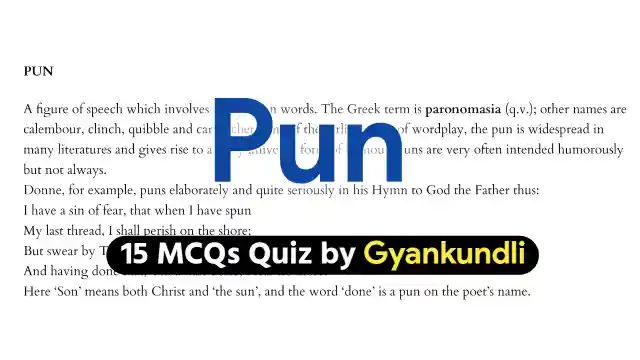
It is important to note that puns serve both comic and serious purposes. In most modern writing, they are used for humour. But earlier writers used them seriously as well. For instance, John Donne in his Hymn to God the Father uses the word “Son” to mean both Christ and the sun, and “done” also refers to his own name. This shows how a pun can deepen meaning rather than simply create laughter.
Similarly, in dramatic literature, Shakespeare frequently used puns. A famous example occurs in Romeo and Juliet, where the dying Mercutio says, “Ask for me tomorrow and you shall find me a grave man.” The word “grave” here means both serious and a burial place. This creates a mixture of humour and tragedy at the same time.
There are also special forms of pun. Equivoque is when a single word carries two meanings in the same context. Another form, asteismus, involves replying to someone’s words in a different sense. Writers like James Joyce are well known for using complex puns throughout their works such as Ulysses and Finnegans Wake.
Puns can also be classified into types such as homophonic puns (same sound, different spelling), homographic puns (same spelling, different meaning), and homonymic puns (same spelling and sound but different meanings). Compound and recursive puns are more complex forms involving multiple layers of meaning.
Historically, puns are very ancient. They were present even in early civilizations like Egyptian and Sumerian cultures. Over time, their use shifted more towards humour, especially after the eighteenth century, though some modern writers still use them seriously.
In conclusion, a pun is a simple yet powerful device. It adds humour, wit, and sometimes depth to language. For exams, remember its definition, types, and examples from Donne and Shakespeare, as these are commonly asked points.
Pun MCQ Quiz with 15 Questions

Name of Quiz : Pun
Rank - 1 : Khushi jain
Score : 100%
Rank - 2 : Xia
Score : 93%
Rank - 3 : Oslo
Score : 93%
Rank - 4 : Jk
Score : 93%
Rank - 5 : D
Score : 93%
Read This Also : Literary Terms Quizzes: 300+ MCQs
Discover more from GYANKUNDLI
Subscribe to get the latest posts sent to your email.